
Chip Seal vs Concrete Driveways – Which is Better?
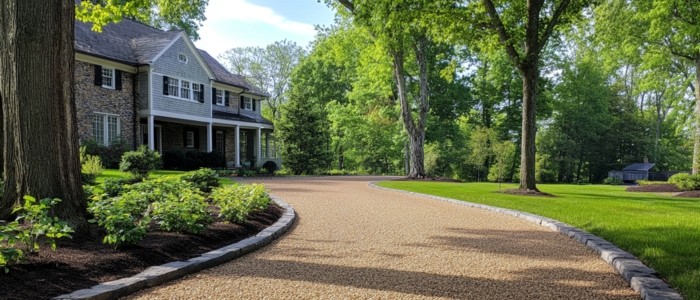
The most low-maintenance driveways begin with durable, weather-resistant materials installed over a strong, well-prepared base. Whether you choose chip seal or concrete, long-term performance relies more on proper foundation work, drainage, and edge support than on the surface itself. When these elements are done correctly, cracking is minimized, moisture damage is reduced, and maintenance stays limited to basic cleaning and occasional sealing.
Homeowners want a driveway that looks good and lasts without constant repairs, especially with busy schedules and limited time for upkeep.
That’s why the comparison of chip seal vs concrete is one of the most common questions in residential paving: A driveway isn’t just a surface, it’s a long-term investment that affects curb appeal, safety, property value, and ongoing maintenance costs. Choosing the right material matters, and so does understanding how each option performs in real New England conditions, where freeze–thaw cycles, moisture, and seasonal wear play major roles.
This guide provides a clear, expert-driven look at chip seal vs concrete, explaining how each material is constructed, what type of maintenance it realistically requires, how climate impacts durability, and where each material tends to perform best. The purpose isn’t to promote one option over another, but to give homeowners a balanced, trustworthy evaluation grounded in construction standards and field experience.
You’ll learn:
- What “Low-Maintenance” Really Means for a Driveway
- Chip Seal vs Concrete – Key Material Comparison
- Which Material Wins – and Under What Conditions?
- Installation & Design: Minimizing Future Maintenance
- Maintenance Checklist: Easy Tasks for Long-Term Results
- Cost vs Long-Term Value
- Eco-Friendly Considerations
- Choosing a Trusted Installer & Getting a Quote
- Summary & Final Recommendation
With decades of paving experience throughout New England, NEAS has seen firsthand that the success of chip seal vs concrete hinges on proper base preparation, soil evaluation, and drainage planning, not just the visible surface layer. This article breaks down everything homeowners need to make a confident, well-informed decision.
What “Low-Maintenance” Really Means for a Driveway
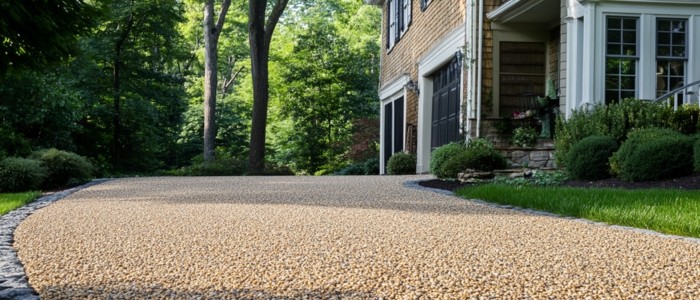
When evaluating chip seal vs concrete, homeowners often assume the surface material alone determines how much maintenance the driveway will require. In reality, “low-maintenance” is the result of several construction and environmental factors working together. A well-installed driveway, regardless of material, should require minimal annual care and hold up reliably against weather, soil movement, and everyday use.
Low-maintenance driveways share these core characteristics:
1. Minimal Annual Care
A driveway that qualifies as low-maintenance should need only basic sweeping, rinsing, and surface checks throughout the year. Materials that shed water well and resist surface degradation naturally reduce the need for hands-on upkeep.
For more on chip seal performance and installation technique, visit: Chip Seal Driveway – Complete Guide
2. Strong Resistance to Cracking
Freeze–thaw cycles are one of the primary stressors for New England driveways. Both chip seal vs concrete surfaces perform significantly better when laid over a properly compacted base that limits shifting during seasonal temperature changes. Without that, even premium materials fail prematurely.
3. Protection Against Weed Growth
Joint gaps, untreated edges, and poorly compacted bases create opportunities for weeds to emerge. Chip seal provides a textured, stone-embedded finish that naturally limits joint exposure, while concrete relies heavily on proper joint spacing and sealing to deter growth.
4. Efficient Drainage
A driveway with poor drainage will deteriorate regardless of surface type. Standing water leads to base erosion, frost heaving, and long-term structural issues. Proper grading, water direction, and edge detailing are therefore essential components of a low-maintenance surface, especially in climates with harsh winters.
5. Durable Edges and Joint Details
Edges and transition points often fail before the surface itself. Concrete requires strategically spaced expansion joints, while chip seal benefits from compacted edges that prevent stone displacement. In both systems, thoughtful edge design dramatically reduces ongoing repairs.
6. High-Quality Installation
When comparing chip seal vs concrete, installation quality is arguably the most important factor influencing future upkeep. We routinely see driveway failures that can be traced not to the surface material, but to insufficient base depth, improper grading, or rushed curing.
Thinking About a New Chip Seal Driveway?
Request a Free Quote
Our team is ready to help you create a durable, beautiful surface that stands the test of time. Contact us today to learn more.
Chip Seal vs Concrete – Key Material Comparison
Choosing between chip seal vs concrete requires understanding how each surface is built, how it performs under real climatic stressors, and what kind of long-term maintenance it typically involves. Both materials have strengths, limitations, and ideal use cases. For additional technical background on pavement performance in different climates, the Federal Highway Administration provides guidance on pavement design and durability. Below is a clear, unbiased comparison grounded in construction principles and real-world installation experience across New England.
Table of Key Material Comparison
| Category | Chip Seal | Concrete |
| What It Is | Liquid asphalt binder topped with crushed stone and compacted | Poured mixture of cement, sand, aggregate, and water |
| Installation | Applied in layers, rolled to embed stone; quick installation | Poured into forms, leveled, jointed, and cured over several days |
| Pros | Cost-effective, flexible, excellent traction, quick install, natural look, easier repairs | Long lifespan, smooth appearance, low routine maintenance, strong load capacity, good curb appeal |
| Cons | Shorter lifespan, periodic resurfacing, loose stone during curing, rustic aesthetic | Higher upfront cost, prone to cracking without proper base, repairs more noticeable, longer install |
| Ideal For | Long rural driveways, natural landscapes, budget-conscious projects, high-traction surfaces | Modern/urban homes, stable soil sites, heavy vehicle use, polished appearance |
| Performance Factors | Flexibility helps adapt to minor ground movement; requires strong base to prevent washboarding | Rigid surface demands excellent drainage and joint placement to prevent cracking |
| Aesthetic Style | Rustic, textured, blends into environment | Clean, smooth, modern finish |
| Maintenance Reality | Needs resurfacing every 7–10 years; easy localized repairs | Periodic sealing and crack monitoring; difficult-to-hide patchwork |
| Climate Notes | Performs well with flexibility in freeze–thaw regions when base is properly built | Sensitive to freeze–thaw unless drainage and base prep are optimal |
Chip Seal
Chip seal, sometimes referred to as tar-and-chip, is created by applying a hot liquid asphalt binder and embedding it with crushed stone. When installed by experienced professionals, it offers reliable performance and a natural, textured appearance.
What Chip Seal Is
Chip seal is a multi-layer surface composed of:
- A heated asphalt emulsion
- A layer of clean, uniformly sized stone
- Mechanical rolling to embed the aggregate
The result is a durable, flexible surface suitable for both residential and larger rural driveways.
For technical details and benefits, see:
Chip Seal Driveway Benefits
Chip Seal Driveway Resurfacing
Advantages of Chip Seal
- Cost-effective for long or wide driveways
- Flexible surface that adapts to minor ground movement
- Excellent traction, especially in wet or icy weather
- Quick installation, reducing downtime
- Naturally rustic aesthetic, ideal for rural or wooded properties
- Easier and more affordable repairs compared to concrete
Limitations of Chip Seal
- Needs periodic resurfacing (typically every 7–10 years)
- Loose stone may appear during curing
- Less formal appearance compared to smooth concrete
- Requires proper base prep to prevent washboarding or stone displacement
Ideal Use Cases
Chip seal performs well in:
- Rural settings
- Long private driveways
- Properties prioritizing natural aesthetics
- Budget-conscious projects
- Locations where traction is a high priority
NEAS specializes in chip seal installation and maintenance across New England, where the surface’s flexibility and traction can be advantageous in freeze, thaw conditions.
For ongoing maintenance guidance, visit: Chipseal Driveway Maintenance
Concrete
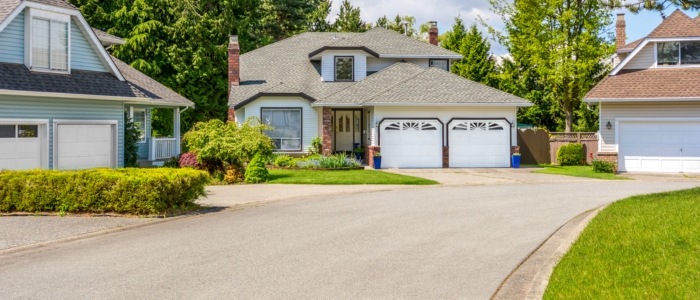
Concrete is a rigid, solid slab made from cement, sand, aggregates, and water. Its performance depends heavily on curing conditions, joint placement, and base quality. Understanding its characteristics helps homeowners make informed decisions.
What Concrete Is
Concrete driveways are constructed by:
- Forming a contained slab
- Pouring and leveling a cement-based mixture
- Embedding control joints to manage cracking
- Curing for multiple days to achieve strength
Because concrete is rigid, its success is closely tied to soil stability and drainage.
Advantages of Concrete
- Long lifespan when installed under the right conditions
- Clean, smooth appearance suitable for modern or suburban homes
- Low routine maintenance, typically limited to sealing and cleaning
- Good load-bearing capacity for vehicles
- High durability when joints and drainage are properly engineered
Limitations of Concrete
- Higher upfront cost
- Prone to cracking if the base shifts or moisture freezes beneath
- Repairs are more visible and often more expensive
- Longer installation and curing time
- Heat and freeze cycles can accelerate wear without correct joint spacing
Ideal Use Cases
Concrete is often chosen for:
- Homes seeking a polished, modern look
- Urban or suburban settings
- Properties with stable, well-drained soil
- Driveways with frequent vehicle traffic
For additional background on eco-friendly options and alternatives, see: Eco-Friendly Driveway Options
Which Material Wins and Under What Conditions?
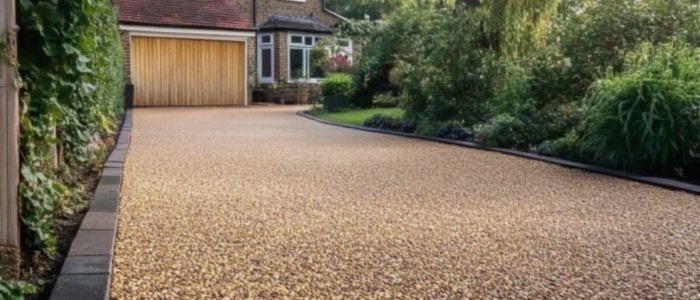
Determining a “winner” in the chip seal vs concrete comparison depends entirely on your priorities, climate, soil conditions, and driveway layout. Each material performs best in different scenarios, and choosing the right one requires weighing environmental factors against cost, longevity, and the character of your property. For additional insight into how climate and environmental conditions affect pavement materials, the Federal Highway Administration offers research on pavement performance in varying climates.
Here’s a balanced breakdown of when each surface typically makes the most sense.
When Chip Seal Makes More Sense
Chip seal often performs best when homeowners prioritize practicality, affordability, and natural aesthetics. Its flexible structure helps it adjust to minor ground movement, an advantage in regions with frequent freeze–thaw cycles. When maintained on a proper schedule, chip seal can deliver reliable traction and strong weather resistance.
Chip seal is especially well suited for:
- Long or rural driveways where cost efficiency matters
- Properties that benefit from a natural, rustic appearance
- Areas where traction is important, especially in icy or wet conditions
- Driveways with moderate local traffic
- Projects requiring faster installation
For those considering a chip seal system, NEAS provides extensive guidance on surface options: Explore Chip Seal Driveways
When Concrete Makes More Sense
Concrete is often selected for its smooth finish, structural strength, and long lifespan. It is important for homeowners to understand where it performs best so they can make a well-rounded decision.
Concrete can be a strong choice for:
- Urban or suburban homes with modern architecture
- Stable, well-drained soils
- Driveways expecting frequent vehicle traffic
- Projects requiring a polished, uniform appearance
Because concrete is rigid, its success is closely tied to the precision of its drainage design, joint spacing, and curing process. Poor preparation or soil instability can lead to cracking, one of the main limitations homeowners should evaluate honestly before choosing this material.
Summary of Advantage by Scenario
| Scenario | Material That Typically Performs Best |
| Long, rural driveway | Chip Seal |
| Need for traction | Chip Seal |
| Modern aesthetic | Concrete |
| Highest long-term structural strength | Concrete |
| Lowest upfront cost | Chip Seal |
| Freeze–thaw flexibility | Chip Seal (with proper base) |
| Minimal visible joints | Concrete |
| Quick installation | Chip Seal |
For more insights on chip seal’s long-term value, see:
Chip and Seal Driveway Cost Guide

Installation & Design: Minimizing Future Maintenance
When comparing chip seal vs concrete, one of the most important factors, often more important than the material itself is the quality of the installation. A well-prepared base, proper grading, and correct edge support determine how long either surface will last and how much maintenance it will require over time.
Even the best driveway material cannot outperform a poorly built foundation.
Sub-Base Preparation
A strong, compacted base is essential for both surfaces. Without proper depth and compaction, driveways are more likely to settle, shift, or crack. In the case of chip seal, poor base work can lead to stone displacement; for concrete, it often results in cracking.
For deeper guidance on long-term driveway performance, see:
What Type of Driveway Lasts the Longest
Drainage and Grading
Water management plays a major role in driveway longevity. Both chip-seal vs. concrete surfaces perform better when:
- Water is directed away from the driveway
- The base is protected from saturation
- Slope and runoff are planned correctly
Poor drainage is one of the leading causes of frost heaving, soft spots, and premature cracking in New England.
Edges and Joint Details
Chip seal edges should be compacted and supported to prevent stone loss, while concrete requires expansion joints at specific intervals to manage natural movement. In both cases, edge design impacts how well the surface holds up over time.
Learn more about chip seal maintenance here:
Chipseal Driveway Maintenance
Sealing and Surface Protection
- Chip seal requires periodic resurfacing every 7–10 years.
- Concrete typically needs sealing and joint upkeep to protect the surface.
Neither surface is fully “maintenance-free,” but proper installation dramatically reduces future upkeep.
Quality Installers Make the Difference
Whether choosing chip seal vs cement, homeowners should always work with experienced contractors who understand soil conditions, drainage, and climate impacts. Across New England, NEAS regularly evaluates existing driveways and sees that many long-term issues originate from shortcuts taken during the initial build, not from the surface choice itself.
- For commercial, industrial, or municipal applications, installation best practices apply even more:
Maintenance Checklist: Easy Tasks for Long-Term Results
Both surfaces require some upkeep. The main difference in chip seal vs concrete is how often it’s needed.
Annual:
- Sweep debris
- Rinse dirt/salt
- Check for early cracks
- Keep drainage clear
For chip seal care, see the Chip Seal Driveway Maintenance Guide.
Every Few Years:
- Chip seal: resurfacing every 7–10 years
- Concrete: sealing and joint checks
Avoid: standing water, ignored cracks, weed growth, and loading edges with heavy vehicles.
A well-built base reduces nearly all long-term issues, regardless of chipseal vs concrete.
Cost vs Long-Term Value
Understanding cost helps homeowners balance budget and lifespan in the chip seal vs concrete decision.
General Comparisons
- Chip seal generally has a lower upfront investment.
- Concrete typically has a higher initial cost but may provide a longer lifespan depending on conditions.
Lifespan:
- Chip seal: 7–10 years before resurfacing
- Concrete: 30–50 years with proper drainage and joint care
Value Breakdown: Chip seal offers a lower initial investment and affordable resurfacing cycles, making it ideal for long or rural driveways. Concrete costs more upfront but lasts longer when installed on a stable, well-drained base. Long-term value depends heavily on soil conditions, drainage planning, and project goals.
For cost insight, visit Chip and Seal Driveway Cost.
Eco-Friendly Considerations
Both materials have environmental pros and cons, and performance varies by region.
Chip Seal:
- Uses fewer raw materials
- Often incorporates locally sourced stone
- Lower production energy than cement-based materials
Concrete:
- Long lifespan reduces full replacement cycles
- Can incorporate recycled aggregates
- Permeable options can improve drainage in certain designs
For additional sustainable driveway options, see Eco-Friendly Driveway Ideas.
Thinking About a New Chip Seal Driveway?
Request a Free Quote
Our team is ready to help you create a durable, beautiful surface that stands the test of time. Contact us today to learn more.
Choosing a Trusted Installer & Getting a Quote
Whether comparing chip seal vs concrete or evaluating any driveway material, choosing a qualified installer is one of the most important factors in long-term performance. Even the highest-quality surface will fail prematurely if the foundation, grading, or drainage is not built correctly.
What to Look For
- A portfolio of similar driveway projects
- Experience with local soil and climate conditions
- Clear explanation of base preparation and drainage plans
- Transparent timelines and material specifications
- Warranty or service support options
Questions to Ask
- What type of sub-base will you install, and how deep?
- How will you manage drainage and water run-off?
- What maintenance should I expect over the next 10 years?
- Are resurfacing or repair services available?
Why It Matters
Across New England, we often evaluate driveways where the issues stem from installation shortcuts—not the surface material itself. Proper compaction, slope, and edge support are what reduce long-term cracking, settlement, and drainage problems in both chip-seal vs. concrete systems.
Getting a Quote
Homeowners should request more than one estimate and compare details such as:
- Base depth
- Material type and application method
- Project timeline
- Total lifecycle expectations, not just upfront cost
If you’re considering chip seal or resurfacing, we can provide a detailed project evaluation and recommendations based on your property needs.
Contact us to request a quote and discuss the best approach for your driveway.
Thinking About a New Chip Seal Driveway?
Request a Free Quote
Our team is ready to help you create a durable, beautiful surface that stands the test of time. Contact us today to learn more.
Summary & Final Recommendation
Choosing between chip seal vs concrete ultimately depends on your driveway’s length, your budget, soil and drainage conditions, and the style you want for your property. Both materials can perform well when installed correctly, and both require basic maintenance over time. The difference lies in how each surface behaves under New England weather and what long-term value you expect from the project. For additional insight into how pavement materials respond to climate and evolving surface conditions, the National Center for Asphalt Technology offers research on pavement performance.
No matter which material you choose, the success of any driveway comes down to the quality of the installation. Proper grading, base depth, compaction, and edge support will define how well the surface performs over the next decade.
For homeowners considering chipseal vs concrete or any variation such as chip seal vs cement, NEAS provides expert guidance, clear recommendations, and high-quality chip seal installation services tailored to New England conditions.
To discuss your project or request a quote, connect with our team!
Chip Seal vs Concrete: Full Comparison Table
| Category | Chip Seal | Concrete |
| Material Composition | Asphalt emulsion topped with crushed stone | Cement, sand, aggregates, water |
| Surface Type | Flexible, textured surface | Rigid, smooth slab |
| Installation Time | Fast installation, quick curing | Longer installation and multi-day curing |
| Upfront Cost | Lower initial investment | Higher initial investment |
| Lifespan | 7–10 years (with resurfacing cycles) | 30–50 years (depending on prep and climate) |
| Maintenance Frequency | Moderate: resurfacing every 7–10 years | Low: periodic sealing, crack monitoring |
| Resistance to Cracking | Good flexibility reduces cracking risk | Prone to cracking without proper joints and soil stability |
| Freeze–Thaw Performance | Flexible surface adapts to ground movement | Vulnerable to freeze-thaw expansion if water penetrates base |
| Drainage Behavior | Stone texture promotes surface shedding | Must rely on slope and joints to prevent pooling |
| Traction | Excellent traction (stone texture) | Smooth surface, less traction without special finish |
| Aesthetic Style | Rustic, natural, blends into landscape | Clean, modern, uniform finish |
| Installation Requirements | Requires proper base + compaction for stone retention | Requires leveling, forming, cured joints, engineered slope |
| Repair Difficulty | Easier and more affordable repairs | Repairs are more visible and costly |
| Heat Behavior | Surface stays relatively cooler than asphalt | Can retain heat and lighten over time |
| Ideal Driveway Length | Excellent for long rural driveways | Works best for short to mid-length residential driveways |
| Ideal Property Type | Rural, wooded, or natural landscapes | Modern, suburban, or urban homes |
| Load-Bearing Strength | Good for standard residential traffic | Strong structural strength for heavy vehicles |
| Environmental Notes | Uses fewer resources; aggregates often local | Can incorporate recycled materials but energy-intensive to produce |
| Noise Level | Slightly noisier due to aggregate texture | Quiet, smooth ride |
| Edge Behavior | Edges should be compacted for stability | Edges must be formed or reinforced to prevent chipping |
| Curing Time Before Use | Typically ready sooner | Can take several days to cure fully |
| Long-Term Value | Cost-effective for large areas | Higher cost but long lifespan |
| Common Issues if Installed Poorly | Stone loss, washboarding, drainage ruts | Cracking, spalling, frost heaving |
| Best Use Case Summary | Cost-effective, natural look, strong traction for rural or long driveways | Polished appearance, long lifespan, strong structural stability with proper drainage |