
Everything You Need to Know About Macadam Driveways in 2026
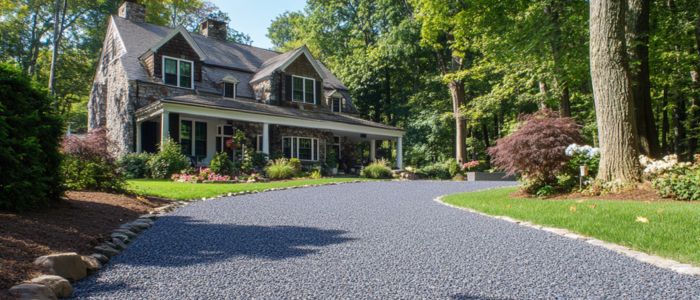
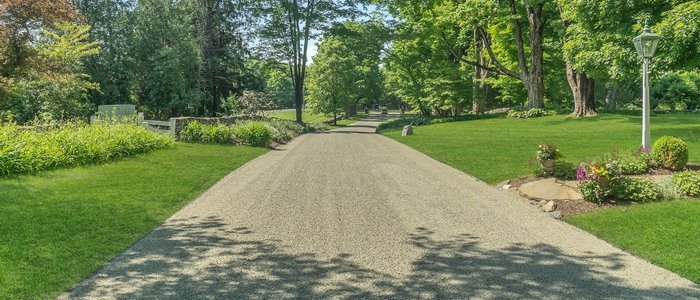
Macadam driveways offer a natural stone finish for homeowners who want an alternative to a smooth blacktop surface. In New England Asphalt’s residential offering, macadam refers to a chip-sealed driveway: stone chips embedded in asphalt binder over a suitable prepared surface.
Often called oil and stone, this finish can complement traditional homes, landscaped entrances, and rural properties. Choosing it means looking beyond appearance, though. The condition of the foundation, drainage, vehicle use, and future surface renewal all matter.
Here is what to consider before deciding whether a macadam driveway fits your property.
Table of Contents
- What Is a Macadam Driveway?
- Benefits and Limitations of Macadam Driveways
- Macadam vs. Asphalt and Other Driveway Materials
- What Affects Macadam Driveway Cost?
- How a Macadam Driveway Is Installed
- How Long Does a Macadam Driveway Last?
- Maintenance and winter care
- Design Ideas and a Martha’s Vineyard Project
- Frequently Asked Questions
- Discuss Your Driveway Project
What Is a Macadam Driveway?
The word macadam comes from John Loudon McAdam’s early roadbuilding method using compacted broken stone. Its meaning has broadened over time, so a quote should describe the actual materials and construction rather than relying on the name alone.
For the chip-sealed driveways discussed here, the contractor applies asphalt binder and stone aggregate separately, then rolls the stone into the binder. This differs from conventional hot-mix asphalt, where the aggregate and asphalt binder are mixed before placement.
New England Asphalt’s residential chip-sealing options include treatments for suitable existing surfaces and new driveway work. The appropriate approach depends on what is already there and how the driveway will be used.
Benefits and Limitations of Macadam Driveways
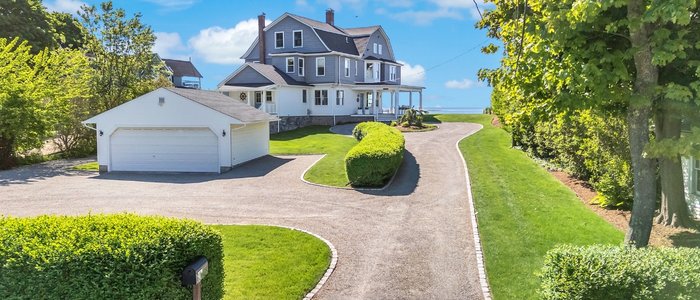
A natural stone appearance
Stone selection influences the driveway’s color and texture. A finish that complements the house, walls, and planting can make the driveway feel like part of the landscape. Ask to see current samples before choosing a color; photographs alone may not show how it looks beside your home.
A textured protective surface
Chip seal provides an exposed aggregate finish and protects suitable underlying pavement against water entry. The Washington State Department of Transportation’s chip-seal overview explains these protective and traction-related functions.
That does not make a conventional chip-sealed driveway permeable. Water still needs a planned route off the surface. A stone appearance should not be mistaken for a drainage system designed to let rainfall soak through.
An option for renewing a suitable driveway
When the underlying driveway remains sound, a new surface treatment may be an alternative to complete reconstruction. Where there are soft areas, settlement, or persistent drainage problems, those issues need attention first.
The Federal Highway Administration’s chip-seal checklist cautions against applying chip seal to structurally distressed pavement. A fresh finish cannot correct a failing foundation.
Tradeoffs to consider
Macadam is not maintenance-free. Loose stone can remain after installation, the finish is more textured than smooth asphalt, and the wearing surface may eventually need another application.
Discuss tight turning areas, slopes, snow-removal equipment, and heavy vehicles during the site assessment. If a smooth surface for small wheels or particular mobility needs is a priority, compare finished examples before choosing.
Thinking About a New Chip Seal Driveway?
Request a Free Quote
Our team is ready to help you create a durable, beautiful surface that stands the test of time. Contact us today to learn more.
Macadam vs. Asphalt and Other Driveway Materials
The best choice depends on the surface you want and the work your site needs. Use this comparison to frame questions for your contractor rather than treating any material as the winner for every property.
| Driveway type | Surface character | What to consider |
| Macadam / chip seal | Textured, exposed stone | Base condition, stone selection, loose aggregate, and future surface renewal |
| Hot-mix asphalt | Smooth, continuous paved finish | Pavement design, cracking or wear, and a suitable care plan |
| Loose gravel | Unbound stone | Material movement, grading, replenishment, and snow removal |
| Concrete | Rigid slab, with plain or decorative finishes | Site preparation, joints, drainage, and repair appearance |
| Pavers or cobblestone | Individual units with defined patterns | Base preparation, edge restraint, joints, and resetting individual units if needed |
Chip seal and asphalt paving both use asphalt binder, but they are different construction methods. Asphalt pavement is also flexible; macadam should not be chosen on the assumption that conventional asphalt is rigid or always lasts less time.
For a closer comparison of the two approaches, see chip seal vs asphalt. Compare quotes for equivalent preparation and site conditions, not just the finish.
What Affects Macadam Driveway Cost?
A useful estimate starts by identifying whether the project is surface renewal, substantial repair, or a new driveway. Those scopes can involve very different amounts of work.
Ask your contractor to explain:
Driveway size and layout: include parking areas, turnarounds, and narrow working areas.
Existing condition: identify removal, repair, or base preparation included in the price.
Drainage: establish whether grading or other drainage work is needed.
Surface specification: confirm the binder, stone, and number of applications proposed.
Finishing work: clarify edges, transitions, cleanup, and excess-stone management.
Future care: ask what is likely to require maintenance and what any warranty covers.
There is no single price that accurately represents every New England property. A resurfacing quote should not be compared directly with a quote that includes rebuilding the driveway foundation.
Our guide to chip and seal driveway cost factors explains the main considerations. Request a site-specific estimate for current pricing and a written scope of work.
How a Macadam Driveway Is Installed
1. Assess the driveway and drainage
The contractor examines the existing surface, slope, water movement, and expected traffic. Tell the team about recurring puddles, soft areas, winter problems, and regular deliveries or service vehicles.
This assessment determines whether the site is suitable for a surface treatment or needs more extensive preparation.
2. Prepare a stable foundation or existing surface
New driveway construction can require excavation, grading, and a compacted aggregate base. Resurfacing an existing driveway may instead involve cleaning and targeted repairs.
The preparation should match the property. A specified base depth or drainage design should come from the site assessment, not a universal rule copied from another project.
3. Apply binder and stone
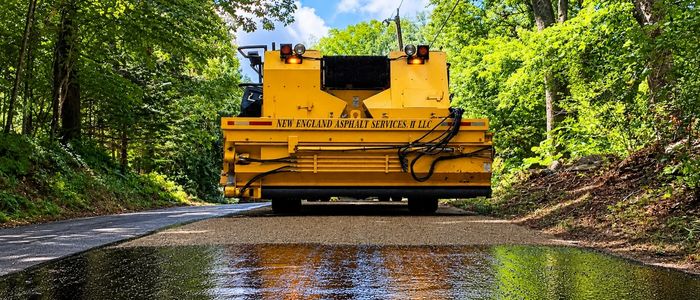
The crew distributes the asphalt binder, spreads the selected aggregate, and rolls the surface. In a double-chip application, a second binder-and-stone treatment follows the first.
New England Asphalt describes asphalt emulsion in its residential process. “Tar and chip” is a familiar name, but it should not replace a clear material specification in your proposal.
4. Finish the surface and explain aftercare
Rolling embeds the stone into the binder. The crew then manages excess aggregate and explains when and how the driveway can be used.
Follow the installer’s instructions for driving, parking, and turning. Weather, binder, and site conditions affect the work; permission to use the driveway does not necessarily mean every curing process is complete.
For a fuller explanation of the application stages, read how chip seal paving works.
How Long Does a Macadam Driveway Last?
Separate two questions: how long the foundation remains serviceable and when the surface needs renewal. A driveway can remain in use through multiple surface treatments, so those are not the same lifespan.
As a highway reference, WSDOT’s pavement policy uses a typical six-to-eight-year design period for chip seals. That is not a prediction or warranty for a residential NEAS installation.
Ask for an assessment based on your driveway’s condition, traffic, drainage, and proposed treatment. Avoid relying on an unconditional 20–30-year promise for a single chip-seal surface.
Maintenance and winter care
Keep drainage routes clear and have developing problems inspected before they spread. Persistent loose stone, exposed areas, depressions, or standing water deserve attention.
Obtain care instructions for the specific finish. Do not assume that routine blacktop sealcoating is appropriate for decorative chip stone. New England Asphalt’s residential guidance says special sealers are not required to protect its stone colors and texture.
Before winter, discuss plow or snowblower setup with the installer and your snow-removal contractor. The goal is to clear snow without scraping or displacing the stone finish.
If the surface wears but the foundation remains suitable, discuss chip-stone resurfacing options. If the underlying structure is failing, another surface treatment alone may be insufficient.
Design Ideas and a Martha’s Vineyard Project

Consider the driveway together with the house exterior, garden walls, borders, and paths. Stone tone and texture should suit the property at both the entrance and the parking area.
New England Asphalt completed a chip-seal driveway for a 100-acre private Arabian horse farm on Martha’s Vineyard. The oil-and-stone finish complements the property’s rural setting and connects its residential and equestrian areas.
View the Martha’s Vineyard chip-seal project for an example of this finish in an established landscape. Its appearance can inform design choices, while your own site assessment determines the construction requirements.
Frequently Asked Questions
In this article, macadam describes the chip-sealed residential surface offered by New England Asphalt. The term is used differently elsewhere, so ask each contractor to specify the proposed construction.
It can be suitable when the existing driveway is sound and prepared appropriately. Settlement, serious deterioration, and drainage problems need evaluation before adding a new finish.
That depends on the complete driveway construction and the loads involved. Give the contractor details about vehicle weight, parking locations, and turning movements before the work is specified.
Its environmental impact depends on the materials, transport, preparation, and maintenance involved. Keeping a serviceable foundation may avoid some replacement work, but do not assume a chip-seal finish contains recycled asphalt or is automatically greener than every alternative.
Look for relevant completed projects and a written proposal explaining preparation, drainage, materials, cleanup, aftercare, and warranty terms. Ask who will assess the existing driveway and how unexpected base problems will be handled.
Thinking About a New Chip Seal Driveway?
Request a Free Quote
Our team is ready to help you create a durable, beautiful surface that stands the test of time. Contact us today to learn more.
Discuss Your Driveway Project
New England Asphalt Services brings experience since 1967 to chip-sealing projects. We can discuss the stone finish and treatment options suited to your property.
Request a Quote and tell us your location, approximate driveway size, existing surface, and how you use it. These details provide a starting point for evaluating the work your driveway needs.