Macadam Driveways – Durable, Eco-Friendly Paving for Your Home
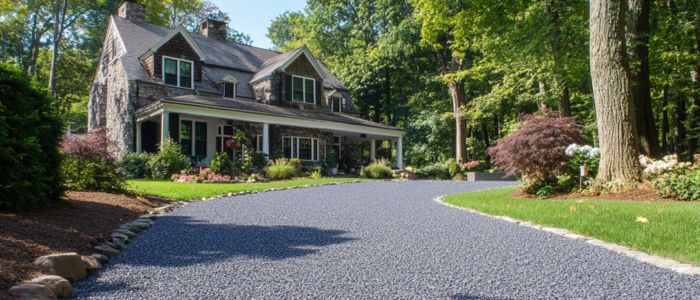
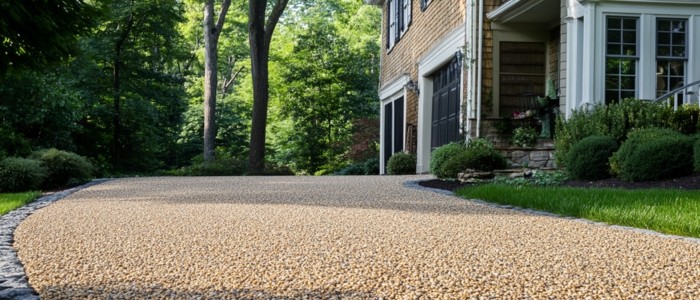
A driveway leading to a house, showcasing a macadam driveway options.

Your driveway is more than just a path, it’s the first impression of your home and a critical component of your property’s infrastructure. Choosing the right driveway material is essential for long-term durability, maintenance ease, and curb appeal, especially in regions like the Northeast with demanding weather conditions. 

This is why Macadam driveways, known for their layered stone structure and asphalt binding, have become the premier solution. This option offers a cost-effective, weather-resistant, and aesthetically flexible paving choice. 

This article will explore what Macadam driveways are, how they’re professionally built, their unique benefits, and how they compare to other driveway types to help you make an informed investment.

Table of Contents  

  1. What is a Macadam Driveway?
  2. Key Advantages of Macadam Driveways
  3. The Installation Process
  4. Why Choose Macadam (Chip Seal) With New England Asphalt?
  5. Maintenance, Longevity & Surface Treatments
  6. Macadam vs. Other Driveway Types
  7. Design & Curb Appeal Inspiration
  8. Frequently Asked Questions (FAQs)
  9. How New England Asphalt Helps

What is a Macadam Driveway?

Definition & Origins

The Macadam driveway originated from an ingenious early 19th-century technique developed by Scottish engineer John Loudon McAdam. McAdam designed a revolutionary method for road construction using compacted layers of angular, small stone aggregates.

This innovation provided a robust and durable surface that dramatically improved travel. While the original method used only stone compaction, modern Macadam, or Chip Seal, further enhances this durability by binding the compacted stone layers with hot asphalt or tar. For a detailed guide on this construction style, see our post on the Chip Seal Driveway process.

Primary Materials: Aggregate & Asphalt

The Macadam Driveway’s structure relies on layers of stone aggregate bound by hot asphalt or tar, creating a strong, stable surface. Different aggregate sizes, colors, and textures can customize the driveway’s appearance, adding visual interest to its inherent durability.

For those interested in this driveway style, New England Asphalt, the Northeast’s most trusted chip sealing contractor since 1967, offers custom options and consultations on aggregate selections, backed by our in-house quality-controlled material processing. Learn more about our company and decades of experience on our About Us page.

Technical Considerations: Ideal Compaction, Drainage Slope, Regional Adaptation

Professional installation demands technical precision. Ideal compaction is achieved using heavy rollers, which force the aggregate firmly into the binder, locking the stone in place. Proper drainage slope is essential; the site must be leveled and graded to allow water to run off the surface naturally, preventing erosion or pooling.

This layered construction also makes it highly adaptable to regional challenges, especially freeze-thaw cycles common in New England, where its flexible structure outperforms rigid pavements.
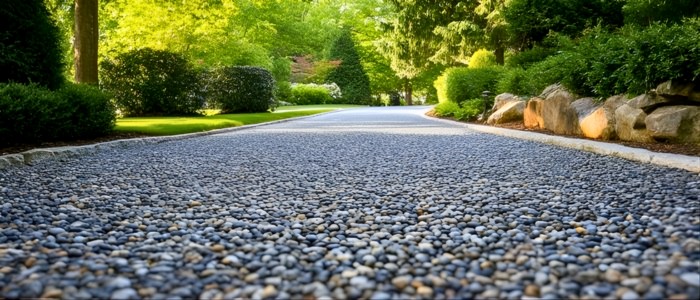
A gravel driveway bordered by loose gravel, showcasing a classic macadam driveway design.

Key Advantages of Macadam Driveways

1. Durability & Load-Bearing Strength

Installing a Macadam driveway provides a surface built for the long haul. Its inherent multi-layered design distributes vehicle weight efficiently, giving it exceptional load-bearing strength that easily handles standard residential traffic and heavy service vehicles alike. This robust and flexible structure is highly effective at resisting the cracking and wear that single-layer, rigid surfaces often succumb to over time.

2. Weather Resistance (Freeze-Thaw, Rainfall, UV)

A standout benefit of Macadam is its superior weather resilience and superior water management capabilities. The layered aggregate base allows water to filter through naturally, making it less susceptible to frost heave and damage during winter freeze-thaw cycles. This porous structure significantly reduces surface runoff and pooling during heavy rains, a key advantage of permeable paving.

3. Eco-Friendly Aspects (Recycled Materials, Permeability, Longevity)

For the environmentally conscious homeowner, Macadam is a sustainable choice. These driveways frequently incorporate recycled materials like reclaimed asphalt pavement (RAP), reducing energy consumption. Additionally, their exceptional longevity minimizes the need for frequent resurfacing or replacement, making this driveway option an eco-friendly choice. Read more about this in our guide to Eco-Friendly Driveway Paving.

4. Cost-Effectiveness Over Life-Cycle

While the upfront cost is comparable to, or slightly higher than, basic asphalt, Macadam driveways are significantly more cost-effective over their life cycle. Their 20-30 year lifespan, coupled with minimal routine maintenance, provides a better long-term return on investment. For an in-depth cost analysis, see our post on Chip and Seal Driveway Cost.
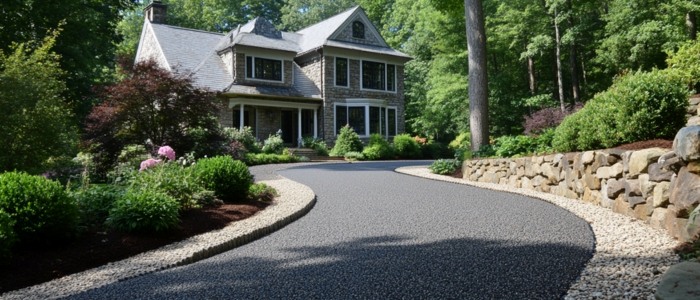
 A well-maintained gravel driveway with landscaping, showcasing the steps involved in installing macadam driveways.

The Installation Process

The precision required during application is why professional installation is paramount. A reliable contractor follows a stringent quality assurance checklist to verify the depth of the base, the temperature of the binder, and the level of compaction at every stage. Hiring an experienced professional ensures lasting results, correct material usage, and optimal surface performance. 

We have refined this process through decades of work with Commercial and Municipal clients.

1. Site Preparation: Excavation, Leveling, Drainage Systems

Before any installation begins, thorough site preparation is non-negotiable for ensuring a lasting foundation. This stage involves excavating the existing surface and sub-grade to the necessary depth. The area is then meticulously leveled and graded to establish the correct slope, which is critical for proper surface water runoff.

In some cases, advanced drainage systems may be installed at this stage to prevent subsurface water intrusion, ensuring the stability and longevity of the final structure.

2. Base/Aggregate Layering: Gradation, Compaction

The installation requires layering high-quality stone aggregate onto the prepared site. Contractors must use properly graded aggregate, stone sorted by size, to ensure maximum density and stability when compacted. Each layer of the base material is applied to specific thicknesses and is heavily compacted using specialized rolling equipment. This careful layering and compaction process is the foundation of the Macadam driveway’s incredible strength.

3. Binder Application: Hot Asphalt/Tar, Temperature Control

The binding agent, typically a hot polymer-modified asphalt or bitumen emulsion, is applied evenly over the base layer. This is a highly technical step that demands precision. The binder must be heated to the exact temperature required by the manufacturer specifications to ensure optimal viscosity and adhesion. Strict temperature control is essential; if the binder is too cool, it won’t bond properly, leading to premature stone loss.

4. Finishing: Compaction, Surface Texture, Curing Time

Once the final layer of stone aggregate is broadcast onto the hot binder, heavy rollers are used to perform the final compaction. This action firmly presses the decorative stone into the binder, locking it into place and creating the dense, stable surface. A professional contractor ensures that the surface texture is uniform. The driveway then requires a specific curing time, typically 24 to 48 hours, before it can handle vehicle traffic, allowing the binder to fully set.

Quality Assurance: Contractor Checklist, “Why Professional Matters”

The precision required during application is why professional installation is paramount. A reliable contractor follows a stringent quality assurance checklist, verifying the depth of the base, the temperature of the binder, and the level of compaction at every stage. Attempting this project as a DIY task often results in improper base preparation or uneven binder application, leading to a much shorter lifespan. Hiring an experienced professional ensures lasting results, correct material usage, and optimal surface performance.

Why Choose Macadam (Chip Seal) With New England Asphalt?

When you choose New England Asphalt, you are partnering with the Northeast’s most trusted chip sealing contractor since 1967. Our deep expertise and specialization mean we understand the unique challenges of the region’s environment. We stand by our work with in-house material quality control and a commitment to customer service, ensuring your Macadam driveway is a perfect, lasting investment that enhances your property’s value and appearance. Learn more about our mission and history on our company page.
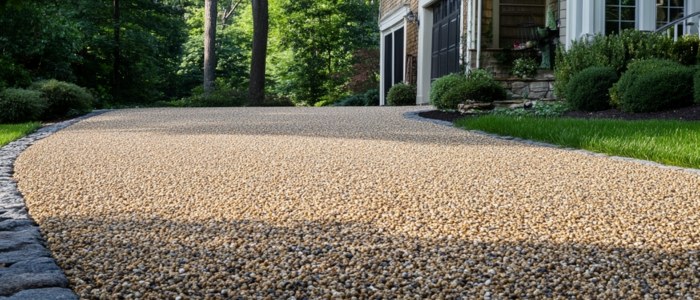
A gravel driveway with a stone path, highlighting the maintenance and longevity aspects of macadam driveways.

Maintenance, Longevity & Surface Treatments

Expected Lifespan (20–30 Years with Proper Care)

With professional installation and diligent routine maintenance, homeowners can expect the surface to last an impressive 20 to 30 years or even longer. For asphalt surfaces, quality of installation and a clear maintenance plan are key to achieving maximum longevity, which is a common finding across many industry studies.

Routine Maintenance: Cleaning, Crack Filling, Sweeps

Routine upkeep is minimal and low-cost. Maintenance typically involves periodic cleaning, optional seal-coating every 5 to 7 years to protect the binder, and prompt crack filling as needed. Learn more in our dedicated guide to Chip Seal Driveway Maintenance.

Upgrade/Resurfacing Path

Even after decades of service, Macadam driveways offer a simple and cost-effective resurfacing path. Instead of a full removal and replacement, a professional contractor can often clean and prepare the existing surface, apply a new layer of binder, and lay fresh aggregate. This process is fully detailed in our guide on Chip Seal Driveway Resurfacing.

Thinking About a New Chip Seal Driveway?

Request a Free Quote

Our team is ready to help you create a durable, beautiful surface that stands the test of time. Contact us today to learn more.

Macadam vs. Other Driveway Types

Comparison: Why Macadam Lasts

Macadam is generally superior to single-layer surfaces because its flexibility resists thermal cracking. This is why many experts consider it among the Types of Driveways That Last the Longest.

Macadam vs. Pavers and Cobblestone

While decorative pavers and cobblestone offer a high-end look, Macadam (Chip Seal) provides a similar premium, decorative stone aesthetic at a fraction of the cost. It is substantially more cost-effective for large driveways and is a fantastic Low Maintenance Driveway Option compared to the frequent weeding and settling that plagues individual paver units.

We’ll continue by addressing the critical competitive section: Macadam vs. Other Driveway Types, and integrate the outline’s request for a comparison table and decision matrix.

Macadam vs. Asphalt Driveways

While standard asphalt driveways are also durable and cost-effective, Macadam offers a key advantage in longevity and flexibility. Traditional asphalt is a single, thick layer prone to cracking when faced with significant temperature changes or ground movement.

Macadam’s layered aggregate design provides greater flexibility and resistance to this thermal cracking, particularly in regions with harsh freeze-thaw cycles. Additionally, Macadam is often considered more eco-friendly, as it requires fewer virgin resources for installation and incorporates high-quality, often local, stone aggregate for the finished surface.

Macadam vs. Concrete Driveways

Compared to the rigidity of concrete, Macadam driveways are significantly more adaptable to ground movement and sub-grade shifting. Concrete is durable but highly prone to developing surface cracks or “spalling” when exposed to road salts or freeze-thaw conditions. Macadam’s flexible structure provides a robust yet yielding solution.

Furthermore, Macadam achieves a natural, textured look similar to gravel or natural stone, while concrete often requires specialized, expensive stamping and coloring to achieve a similar aesthetic.

Macadam vs. Gravel Driveways

Gravel driveways are undeniably budget-friendly upfront, but they fall short on long-term stability and maintenance. Gravel surfaces are prone to shifting, eroding over time (especially on slopes), and requiring constant replenishment and grading.

Macadam driveways provide a stable, low-maintenance, and long-lasting surface with the aesthetic benefit of natural stone. It eliminates the dust, tire tracks, and constant maintenance associated with loose gravel while offering superior stability and a similar rustic charm.

Comparison Table: Key Driveway Paving Options

FeatureMacadam (Chip Seal)Standard AsphaltConcreteLoose Gravel
Upfront Cost (Relative)MediumLow to MediumHighLow
MaintenanceLow (Minimal sealing)Medium (Frequent sealing)Medium (Joint sealing)High (Constant grading/refilling)
Expected Lifespan20–30 Years12–20 Years25–40 YearsIndefinite (High upkeep)
AestheticsHighly Customizable Stone TexturePlain BlackLimited Color/TextureRustic, Loose
Climate SuitabilityExcellent (Flexible, Freeze-Thaw)Good (Prone to Cracking)Fair (Prone to Spalling/Cracking)Good (Prone to Erosion)

Design & Curb Appeal Inspiration

Featured Project: Martha’s Vineyard
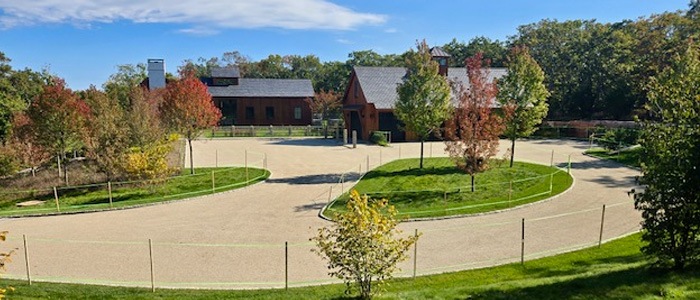
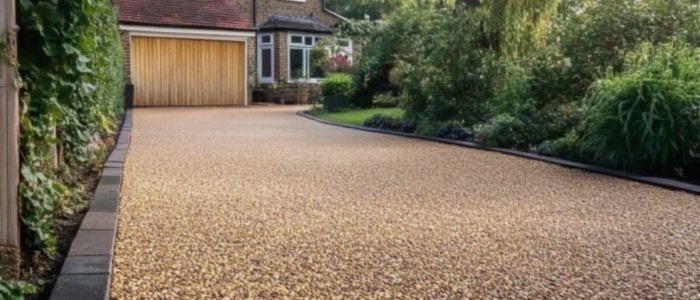
A driveway with a fence and a barn, showcasing macadam paving on Martha’s Vineyard.

In 2024, New England Asphalt had the privilege of transforming the main residence of a stunning 100-acre Arabian horse farm on Martha’s Vineyard. Our team delivered exceptional results, utilizing a custom-selected aggregate to achieve an aesthetic that combined durability with the property’s rustic elegance, proving that Macadam offers both unparalleled functionality and sophisticated design.

Frequently Asked Questions (FAQs)

I. How long does a Macadam driveway last?

With professional installation and proper maintenance, a Macadam driveway can last an impressive 20 to 30 years.

II. Can Macadam driveways handle heavy vehicles?

Yes, due to their robust, multi-layered structure and dense compaction, Macadam driveways are designed to accommodate heavy traffic and commercial vehicles, providing excellent load-bearing strength.

III. Is a Macadam driveway more eco-friendly than asphalt?

Yes, by frequently incorporating recycled materials and reducing the need for frequent resurfacing, Macadam driveways are considered a more sustainable and environmentally conscious paving choice compared to standard asphalt.

VIII. How do I choose the right contractor?

Look for a specialized contractor with decades of experience, in-house quality control over materials (binder and stone), and a portfolio that demonstrates successful Macadam projects in your specific region.

Thinking About a New Chip Seal Driveway?

Request a Free Quote

Our team is ready to help you create a durable, beautiful surface that stands the test of time. Contact us today to learn more.

How New England Asphalt Helps

Transform your Property with a Macadam Driveway

Macadam driveways offer a versatile, eco-friendly, and aesthetically pleasing solution for homeowners looking for the ultimate paving investment. Known for their durability, superior weather resistance, and impressive longevity, they are an excellent investment that substantially enhances a property’s value and appearance.

Ready to upgrade your driveway to a long-lasting, visually appealing Macadam surface?

Contact New England Asphalt today to request a consultation, and let our experts assist you with site inspection, design customization, and a free quote. Reach out today and let us create a lasting impression for your home or business.
Chip Seal vs Concrete Driveways – Which is Better?

The most low-maintenance driveways begin with durable, weather-resistant materials installed over a strong, well-prepared base. Whether you choose chip seal or concrete, long-term performance relies more on proper foundation work, drainage, and edge support than on the surface itself. When these elements are done correctly, cracking is minimized, moisture damage is reduced, and maintenance stays limited to basic cleaning and occasional sealing.

Homeowners want a driveway that looks good and lasts without constant repairs, especially with busy schedules and limited time for upkeep.

That’s why the comparison of chip seal vs concrete is one of the most common questions in residential paving: A driveway isn’t just a surface, it’s a long-term investment that affects curb appeal, safety, property value, and ongoing maintenance costs. Choosing the right material matters, and so does understanding how each option performs in real New England conditions, where freeze–thaw cycles, moisture, and seasonal wear play major roles.

This guide provides a clear, expert-driven look at chip seal vs concrete, explaining how each material is constructed, what type of maintenance it realistically requires, how climate impacts durability, and where each material tends to perform best. The purpose isn’t to promote one option over another, but to give homeowners a balanced, trustworthy evaluation grounded in construction standards and field experience.

You’ll learn:

  1. What “Low-Maintenance” Really Means for a Driveway
  2. Chip Seal vs Concrete – Key Material Comparison
  3. Which Material Wins – and Under What Conditions?
  4. Installation & Design: Minimizing Future Maintenance
  5. Maintenance Checklist: Easy Tasks for Long-Term Results
  6. Cost vs Long-Term Value
  7. Eco-Friendly Considerations
  8. Choosing a Trusted Installer & Getting a Quote
  9. Summary & Final Recommendation

With decades of paving experience throughout New England, NEAS has seen firsthand that the success of chip seal vs concrete hinges on proper base preparation, soil evaluation, and drainage planning, not just the visible surface layer. This article breaks down everything homeowners need to make a confident, well-informed decision.

A gravel and grass driveway leading to a house, illustrating low-maintenance options like chip seal versus concrete.

What “Low-Maintenance” Really Means for a Driveway

When evaluating chip seal vs concrete, homeowners often assume the surface material alone determines how much maintenance the driveway will require. In reality, “low-maintenance” is the result of several construction and environmental factors working together. A well-installed driveway, regardless of material, should require minimal annual care and hold up reliably against weather, soil movement, and everyday use.

Low-maintenance driveways share these core characteristics:

1. Minimal Annual Care

A driveway that qualifies as low-maintenance should need only basic sweeping, rinsing, and surface checks throughout the year. Materials that shed water well and resist surface degradation naturally reduce the need for hands-on upkeep.

For more on chip seal performance and installation technique, visit: Chip Seal Driveway – Complete Guide

2. Strong Resistance to Cracking

Freeze–thaw cycles are one of the primary stressors for New England driveways. Both chip seal vs concrete surfaces perform significantly better when laid over a properly compacted base that limits shifting during seasonal temperature changes. Without that, even premium materials fail prematurely.

3. Protection Against Weed Growth

Joint gaps, untreated edges, and poorly compacted bases create opportunities for weeds to emerge. Chip seal provides a textured, stone-embedded finish that naturally limits joint exposure, while concrete relies heavily on proper joint spacing and sealing to deter growth.

4. Efficient Drainage

A driveway with poor drainage will deteriorate regardless of surface type. Standing water leads to base erosion, frost heaving, and long-term structural issues. Proper grading, water direction, and edge detailing are therefore essential components of a low-maintenance surface, especially in climates with harsh winters.

5. Durable Edges and Joint Details

Edges and transition points often fail before the surface itself. Concrete requires strategically spaced expansion joints, while chip seal benefits from compacted edges that prevent stone displacement. In both systems, thoughtful edge design dramatically reduces ongoing repairs.

6. High-Quality Installation

When comparing chip seal vs concrete, installation quality is arguably the most important factor influencing future upkeep. We routinely see driveway failures that can be traced not to the surface material, but to insufficient base depth, improper grading, or rushed curing.

Thinking About a New Chip Seal Driveway?

Request a Free Quote

Our team is ready to help you create a durable, beautiful surface that stands the test of time. Contact us today to learn more.

Chip Seal vs Concrete – Key Material Comparison

Choosing between chip seal vs concrete requires understanding how each surface is built, how it performs under real climatic stressors, and what kind of long-term maintenance it typically involves. Both materials have strengths, limitations, and ideal use cases. For additional technical background on pavement performance in different climates, the Federal Highway Administration provides guidance on pavement design and durability. Below is a clear, unbiased comparison grounded in construction principles and real-world installation experience across New England.

Table of Key Material Comparison

CategoryChip SealConcrete
What It IsLiquid asphalt binder topped with crushed stone and compactedPoured mixture of cement, sand, aggregate, and water
InstallationApplied in layers, rolled to embed stone; quick installationPoured into forms, leveled, jointed, and cured over several days
ProsCost-effective, flexible, excellent traction, quick install, natural look, easier repairsLong lifespan, smooth appearance, low routine maintenance, strong load capacity, good curb appeal
ConsShorter lifespan, periodic resurfacing, loose stone during curing, rustic aestheticHigher upfront cost, prone to cracking without proper base, repairs more noticeable, longer install
Ideal ForLong rural driveways, natural landscapes, budget-conscious projects, high-traction surfacesModern/urban homes, stable soil sites, heavy vehicle use, polished appearance
Performance FactorsFlexibility helps adapt to minor ground movement; requires strong base to prevent washboardingRigid surface demands excellent drainage and joint placement to prevent cracking
Aesthetic StyleRustic, textured, blends into environmentClean, smooth, modern finish
Maintenance RealityNeeds resurfacing every 7–10 years; easy localized repairsPeriodic sealing and crack monitoring; difficult-to-hide patchwork
Climate NotesPerforms well with flexibility in freeze–thaw regions when base is properly builtSensitive to freeze–thaw unless drainage and base prep are optimal

Chip Seal

Chip seal, sometimes referred to as tar-and-chip, is created by applying a hot liquid asphalt binder and embedding it with crushed stone. When installed by experienced professionals, it offers reliable performance and a natural, textured appearance.

What Chip Seal Is

Chip seal is a multi-layer surface composed of:

  • A heated asphalt emulsion
  • A layer of clean, uniformly sized stone
  • Mechanical rolling to embed the aggregate

The result is a durable, flexible surface suitable for both residential and larger rural driveways.

For technical details and benefits, see:
Chip Seal Driveway Benefits
Chip Seal Driveway Resurfacing

Advantages of Chip Seal

  • Cost-effective for long or wide driveways
  • Flexible surface that adapts to minor ground movement
  • Excellent traction, especially in wet or icy weather
  • Quick installation, reducing downtime
  • Naturally rustic aesthetic, ideal for rural or wooded properties
  • Easier and more affordable repairs compared to concrete

Limitations of Chip Seal

  • Needs periodic resurfacing (typically every 7–10 years)
  • Loose stone may appear during curing
  • Less formal appearance compared to smooth concrete
  • Requires proper base prep to prevent washboarding or stone displacement

Ideal Use Cases

Chip seal performs well in:

  • Rural settings
  • Long private driveways
  • Properties prioritizing natural aesthetics
  • Budget-conscious projects
  • Locations where traction is a high priority

NEAS specializes in chip seal installation and maintenance across New England, where the surface’s flexibility and traction can be advantageous in freeze, thaw conditions.

For ongoing maintenance guidance, visit: Chipseal Driveway Maintenance

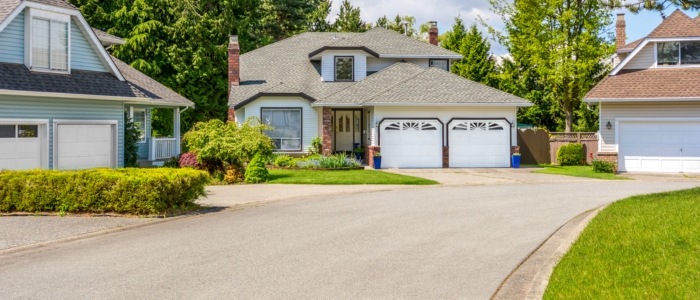
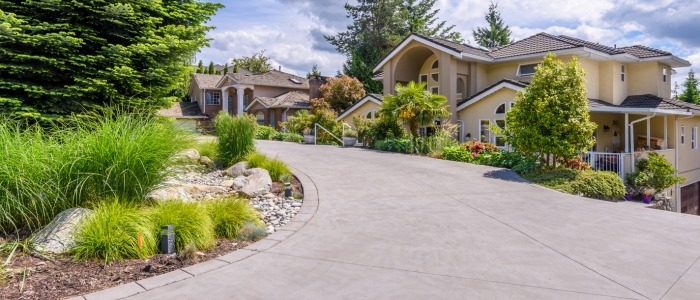
A residential driveway with two garages adjacent to a house, featuring a concrete finish.

Concrete

Concrete is a rigid, solid slab made from cement, sand, aggregates, and water. Its performance depends heavily on curing conditions, joint placement, and base quality. Understanding its characteristics helps homeowners make informed decisions.

What Concrete Is

Concrete driveways are constructed by:

  • Forming a contained slab
  • Pouring and leveling a cement-based mixture
  • Embedding control joints to manage cracking
  • Curing for multiple days to achieve strength

Because concrete is rigid, its success is closely tied to soil stability and drainage.

Advantages of Concrete

  • Long lifespan when installed under the right conditions
  • Clean, smooth appearance suitable for modern or suburban homes
  • Low routine maintenance, typically limited to sealing and cleaning
  • Good load-bearing capacity for vehicles
  • High durability when joints and drainage are properly engineered

Limitations of Concrete

  • Higher upfront cost
  • Prone to cracking if the base shifts or moisture freezes beneath
  • Repairs are more visible and often more expensive
  • Longer installation and curing time
  • Heat and freeze cycles can accelerate wear without correct joint spacing

Ideal Use Cases

Concrete is often chosen for:

  • Homes seeking a polished, modern look
  • Urban or suburban settings
  • Properties with stable, well-drained soil
  • Driveways with frequent vehicle traffic

For additional background on eco-friendly options and alternatives, see: Eco-Friendly Driveway Options

A gravel driveway showcasing the texture and color differences between chip seal and concrete materials.

Which Material Wins and Under What Conditions?

Determining a “winner” in the chip seal vs concrete comparison depends entirely on your priorities, climate, soil conditions, and driveway layout. Each material performs best in different scenarios, and choosing the right one requires weighing environmental factors against cost, longevity, and the character of your property. For additional insight into how climate and environmental conditions affect pavement materials, the Federal Highway Administration offers research on pavement performance in varying climates.

Here’s a balanced breakdown of when each surface typically makes the most sense.

When Chip Seal Makes More Sense

Chip seal often performs best when homeowners prioritize practicality, affordability, and natural aesthetics. Its flexible structure helps it adjust to minor ground movement, an advantage in regions with frequent freeze–thaw cycles. When maintained on a proper schedule, chip seal can deliver reliable traction and strong weather resistance.

Chip seal is especially well suited for:

  • Long or rural driveways where cost efficiency matters
  • Properties that benefit from a natural, rustic appearance
  • Areas where traction is important, especially in icy or wet conditions
  • Driveways with moderate local traffic
  • Projects requiring faster installation

For those considering a chip seal system, NEAS provides extensive guidance on surface options: Explore Chip Seal Driveways

When Concrete Makes More Sense

Concrete is often selected for its smooth finish, structural strength, and long lifespan. It is important for homeowners to understand where it performs best so they can make a well-rounded decision.

Concrete can be a strong choice for:

  • Urban or suburban homes with modern architecture
  • Stable, well-drained soils
  • Driveways expecting frequent vehicle traffic
  • Projects requiring a polished, uniform appearance

Because concrete is rigid, its success is closely tied to the precision of its drainage design, joint spacing, and curing process. Poor preparation or soil instability can lead to cracking, one of the main limitations homeowners should evaluate honestly before choosing this material.

Summary of Advantage by Scenario

ScenarioMaterial That Typically Performs Best
Long, rural drivewayChip Seal
Need for tractionChip Seal
Modern aestheticConcrete
Highest long-term structural strengthConcrete
Lowest upfront costChip Seal
Freeze–thaw flexibilityChip Seal (with proper base)
Minimal visible jointsConcrete
Quick installationChip Seal

For more insights on chip seal’s long-term value, see:
Chip and Seal Driveway Cost Guide

A red dump truck rests near a calm lake, framed by lush trees and scenic hills in the background.

Installation & Design: Minimizing Future Maintenance

When comparing chip seal vs concrete, one of the most important factors, often more important than the material itself is the quality of the installation. A well-prepared base, proper grading, and correct edge support determine how long either surface will last and how much maintenance it will require over time.

Even the best driveway material cannot outperform a poorly built foundation.

Sub-Base Preparation

A strong, compacted base is essential for both surfaces. Without proper depth and compaction, driveways are more likely to settle, shift, or crack. In the case of chip seal, poor base work can lead to stone displacement; for concrete, it often results in cracking.

For deeper guidance on long-term driveway performance, see:
What Type of Driveway Lasts the Longest

Drainage and Grading

Water management plays a major role in driveway longevity. Both chip-seal vs. concrete surfaces perform better when:

  • Water is directed away from the driveway
  • The base is protected from saturation
  • Slope and runoff are planned correctly

Poor drainage is one of the leading causes of frost heaving, soft spots, and premature cracking in New England.

Edges and Joint Details

Chip seal edges should be compacted and supported to prevent stone loss, while concrete requires expansion joints at specific intervals to manage natural movement. In both cases, edge design impacts how well the surface holds up over time.

Learn more about chip seal maintenance here:
Chipseal Driveway Maintenance

Sealing and Surface Protection

  • Chip seal requires periodic resurfacing every 7–10 years.
  • Concrete typically needs sealing and joint upkeep to protect the surface.

Neither surface is fully “maintenance-free,” but proper installation dramatically reduces future upkeep.

Quality Installers Make the Difference

Whether choosing chip seal vs cement, homeowners should always work with experienced contractors who understand soil conditions, drainage, and climate impacts. Across New England, NEAS regularly evaluates existing driveways and sees that many long-term issues originate from shortcuts taken during the initial build, not from the surface choice itself.

A home driveway with landscaped surroundings, highlighting considerations for chip seal and concrete maintenance choices.

Maintenance Checklist: Easy Tasks for Long-Term Results

Both surfaces require some upkeep. The main difference in chip seal vs concrete is how often it’s needed.

Annual:

  • Sweep debris
  • Rinse dirt/salt
  • Check for early cracks
  • Keep drainage clear

For chip seal care, see the Chip Seal Driveway Maintenance Guide.

Every Few Years:

  • Chip seal: resurfacing every 7–10 years
  • Concrete: sealing and joint checks

Avoid: standing water, ignored cracks, weed growth, and loading edges with heavy vehicles.

A well-built base reduces nearly all long-term issues, regardless of chipseal vs concrete.

Cost vs Long-Term Value

Understanding cost helps homeowners balance budget and lifespan in the chip seal vs concrete decision.

Upfront Cost:

  • Chip seal: typically $3–$7 per sq. ft.
  • Concrete: generally $8–$15 per sq. ft.

Lifespan:

  • Chip seal: 7–10 years before resurfacing
  • Concrete: 30–50 years with proper drainage and joint care

Value Breakdown: Chip seal offers a lower initial investment and affordable resurfacing cycles, making it ideal for long or rural driveways. Concrete costs more upfront but lasts longer when installed on a stable, well-drained base. Long-term value depends heavily on soil conditions, drainage planning, and project goals.

For cost insight, visit Chip and Seal Driveway Cost.

Eco-Friendly Considerations

Both materials have environmental pros and cons, and performance varies by region.

Chip Seal:

  • Uses fewer raw materials
  • Often incorporates locally sourced stone
  • Lower production energy than cement-based materials

Concrete:

  • Long lifespan reduces full replacement cycles
  • Can incorporate recycled aggregates
  • Permeable options can improve drainage in certain designs

For additional sustainable driveway options, see Eco-Friendly Driveway Ideas.

Thinking About a New Chip Seal Driveway?

Request a Free Quote

Our team is ready to help you create a durable, beautiful surface that stands the test of time. Contact us today to learn more.

Choosing a Trusted Installer & Getting a Quote

Whether comparing chip seal vs concrete or evaluating any driveway material, choosing a qualified installer is one of the most important factors in long-term performance. Even the highest-quality surface will fail prematurely if the foundation, grading, or drainage is not built correctly.

What to Look For

  • A portfolio of similar driveway projects
  • Experience with local soil and climate conditions
  • Clear explanation of base preparation and drainage plans
  • Transparent timelines and material specifications
  • Warranty or service support options

Questions to Ask

  • What type of sub-base will you install, and how deep?
  • How will you manage drainage and water run-off?
  • What maintenance should I expect over the next 10 years?
  • Are resurfacing or repair services available?

Why It Matters

Across New England, we often evaluate driveways where the issues stem from installation shortcuts—not the surface material itself. Proper compaction, slope, and edge support are what reduce long-term cracking, settlement, and drainage problems in both chip-seal vs. concrete systems.

Getting a Quote

Homeowners should request more than one estimate and compare details such as:

  • Base depth
  • Material type and application method
  • Project timeline
  • Total lifecycle expectations, not just upfront cost

If you’re considering chip seal or resurfacing, we can provide a detailed project evaluation and recommendations based on your property needs.

Contact us to request a quote and discuss the best approach for your driveway.

Thinking About a New Chip Seal Driveway?

Request a Free Quote

Our team is ready to help you create a durable, beautiful surface that stands the test of time. Contact us today to learn more.

Summary & Final Recommendation

Choosing between chip seal vs concrete ultimately depends on your driveway’s length, your budget, soil and drainage conditions, and the style you want for your property. Both materials can perform well when installed correctly, and both require basic maintenance over time. The difference lies in how each surface behaves under New England weather and what long-term value you expect from the project. For additional insight into how pavement materials respond to climate and evolving surface conditions, the National Center for Asphalt Technology offers research on pavement performance.

No matter which material you choose, the success of any driveway comes down to the quality of the installation. Proper grading, base depth, compaction, and edge support will define how well the surface performs over the next decade.

For homeowners considering chipseal vs concrete or any variation such as chip seal vs cement, NEAS provides expert guidance, clear recommendations, and high-quality chip seal installation services tailored to New England conditions.

To discuss your project or request a quote, connect with our team!

Chip Seal vs Concrete: Full Comparison Table

CategoryChip SealConcrete
Material CompositionAsphalt emulsion topped with crushed stoneCement, sand, aggregates, water
Surface TypeFlexible, textured surfaceRigid, smooth slab
Installation TimeFast installation, quick curingLonger installation and multi-day curing
Upfront CostLower ($3–$7 per sq. ft.)Higher ($8–$15 per sq. ft.)
Lifespan7–10 years (with resurfacing cycles)30–50 years (depending on prep and climate)
Maintenance FrequencyModerate: resurfacing every 7–10 yearsLow: periodic sealing, crack monitoring
Resistance to CrackingGood flexibility reduces cracking riskProne to cracking without proper joints and soil stability
Freeze–Thaw PerformanceFlexible surface adapts to ground movementVulnerable to freeze-thaw expansion if water penetrates base
Drainage BehaviorStone texture promotes surface sheddingMust rely on slope and joints to prevent pooling
TractionExcellent traction (stone texture)Smooth surface, less traction without special finish
Aesthetic StyleRustic, natural, blends into landscapeClean, modern, uniform finish
Installation RequirementsRequires proper base + compaction for stone retentionRequires leveling, forming, cured joints, engineered slope
Repair DifficultyEasier and more affordable repairsRepairs are more visible and costly
Heat BehaviorSurface stays relatively cooler than asphaltCan retain heat and lighten over time
Ideal Driveway LengthExcellent for long rural drivewaysWorks best for short to mid-length residential driveways
Ideal Property TypeRural, wooded, or natural landscapesModern, suburban, or urban homes
Load-Bearing StrengthGood for standard residential trafficStrong structural strength for heavy vehicles
Environmental NotesUses fewer resources; aggregates often localCan incorporate recycled materials but energy-intensive to produce
Noise LevelSlightly noisier due to aggregate textureQuiet, smooth ride
Edge BehaviorEdges should be compacted for stabilityEdges must be formed or reinforced to prevent chipping
Curing Time Before UseTypically ready soonerCan take several days to cure fully
Long-Term ValueCost-effective for large areasHigher cost but long lifespan
Common Issues if Installed PoorlyStone loss, washboarding, drainage rutsCracking, spalling, frost heaving
Best Use Case SummaryCost-effective, natural look, strong traction for rural or long drivewaysPolished appearance, long lifespan, strong structural stability with proper drainage